Complete Guide

The Complete
Tattoo Aftercare
Guide

From fresh ink to fully healed — everything you need to know to protect your tattoo, preserve your color, and heal the right way.

6 Weeks to Full Heal
4 Healing Phases
12 FAQ Answered
Days 1–3
Plasma Phase
Days 4–14
Peeling Phase
Weeks 3–4
Settling Phase
Month 2+
Long-Term
Healing Timeline

Your Tattoo's
Healing Journey

Every tattoo heals in four distinct phases. Understanding what's happening under the skin at each stage is the difference between a vibrant healed tattoo and a faded, patchy one.

Days 1–3 The Plasma Phase
What's Happening
  • Your skin is an open wound — the needle has punctured the dermis thousands of times
  • Plasma and ink weep to the surface — this is normal and expected
  • White blood cells rush to the area to begin the immune response
  • The skin is at maximum infection risk during this window
What To Do
  • Remove wrap after 2–4 hours (or follow artist's instructions)
  • Wash gently with fragrance-free soap and lukewarm water
  • Pat dry with a clean paper towel — never rub
  • Apply a thin layer of balm 3x daily
  • Keep out of direct sunlight and water
What To Avoid
  • Petroleum jelly or Vaseline — occlusive, traps bacteria
  • Rewrapping after the first 24 hours
  • Soaking in water (baths, pools, ocean)
  • Touching with unwashed hands
  • Tight clothing over the tattoo
Napalm Balms in Phase 1: The 16+ UMF Manuka Honey creates an active antibacterial environment that inhibits MRSA and common skin pathogens — the same bacteria responsible for most tattoo infections. It simultaneously draws moisture into the healing skin (humectant action) without blocking oxygen exchange, unlike petroleum-based products.
Days 4–14 The Peeling Phase
What's Happening
  • The outer layer of skin (epidermis) begins to shed — this is normal
  • Colors may appear dull or faded — this is temporary
  • Itching is common as new skin cells form underneath
  • Ink is still settling into the dermis during this phase
What To Do
  • Continue applying balm 2–3x daily
  • Let peeling skin fall off naturally
  • Keep the area moisturized — dry skin peels more aggressively
  • Wear loose, breathable clothing over the tattoo
What To Avoid
  • Picking or peeling the skin — this pulls ink out
  • Scratching the itch — tap gently instead
  • Direct sun exposure — UV breaks down ink
  • Over-moisturizing — a thin layer is all you need
Napalm Balms in Phase 2: Calendula extract in the formula has 321+ peer-reviewed citations for promoting fibroblast activity — the skin cells responsible for new tissue formation. This accelerates the peeling phase and reduces the risk of irregular scabbing that causes patchy color loss. Beeswax creates a breathable barrier that keeps the skin hydrated without suffocating it.
Weeks 3–4 The Settling Phase
What's Happening
  • The surface looks healed but deeper layers are still repairing
  • Colors begin to brighten and sharpen as the outer layer fully clears
  • The skin may still feel slightly raised or textured — this is normal
  • Ink is settling into its final position in the dermis
What To Do
  • Reduce balm application to 1–2x daily as needed
  • Begin applying SPF 30+ if the tattoo will be sun-exposed
  • Stay hydrated — skin hydration affects ink vibrancy
  • Continue avoiding prolonged sun exposure
What To Avoid
  • Tanning beds — UV radiation is the #1 cause of ink fading
  • Exfoliating scrubs over the tattoo
  • Harsh soaps or body washes with fragrance
  • Stopping aftercare too early — the deeper layers still need support
Napalm Balms in Phase 3: Vitamin E in the formula prevents oxidative damage to healing skin cells and supports the integrity of the dermis — the layer where your tattoo ink lives permanently. Protecting this layer during the settling phase directly impacts long-term color vibrancy.
Month 2+ Long-Term Maintenance
What's Happening
  • Tattoo is fully healed — the ink is locked into the dermis
  • Ongoing skin health directly affects how the tattoo ages
  • UV exposure, dehydration, and poor skin care cause premature fading
  • Well-maintained tattoos can look vibrant for decades
What To Do
  • Moisturize regularly — especially in dry climates
  • Apply SPF 30–50 whenever the tattoo is sun-exposed
  • Stay hydrated — well-hydrated skin holds ink better
  • Consider a touch-up after 1–2 years if needed
What To Avoid
  • Prolonged unprotected sun exposure
  • Tanning beds
  • Harsh chemical exfoliants directly on the tattoo
  • Neglecting skin hydration — dry skin makes ink look dull
Long-Term with Napalm Balms: The Vivid Color Lock formula is specifically designed for healed tattoos — a lighter daily moisturizer that maintains skin elasticity and provides antioxidant protection to keep your ink looking as sharp as day one.
Quick Reference

Do's & Don'ts

Do This
Wash with fragrance-free soap
Use lukewarm water and a gentle, unscented soap 2x daily during the first two weeks.
Apply a thin layer of balm
Less is more — a thin layer 2–3x daily is all you need. Over-moisturizing can clog pores.
Wear loose, breathable clothing
Tight fabric rubs against healing skin and can pull ink out during the peeling phase.
Use SPF after healing
UV radiation is the #1 cause of tattoo fading. Apply SPF 30+ whenever the tattoo is exposed to sun.
Stay hydrated
Well-hydrated skin heals faster and holds ink better long-term. Drink plenty of water.
Monitor for infection signs
Check the tattoo daily. Redness, warmth, and swelling are normal. See the infection guide below for warning signs.
Don't Do This
Don't use Vaseline or petroleum jelly
Petroleum is fully occlusive — it blocks oxygen to healing skin, traps bacteria, and causes irregular scabbing that pulls ink.
Don't pick or peel the skin
Peeling skin naturally falls off when ready. Forcing it removes ink that hasn't fully settled into the dermis.
Don't soak in water
Baths, pools, hot tubs, and the ocean introduce bacteria and cause the skin to soften — pulling ink out during healing.
Don't scratch the itch
Itching is normal during the peeling phase. Scratching damages healing skin and risks infection. Tap gently instead.
Don't expose to direct sun
UV radiation breaks down tattoo ink and damages healing skin. Keep covered or out of sun for the first 4 weeks.
Don't do heavy exercise for 48 hours
Excessive sweating introduces bacteria to the open wound. Light activity is fine, but avoid soaking the tattoo in sweat.
Common Questions

Frequently Asked Questions

How long does a tattoo take to fully heal?
The surface of a tattoo typically looks healed within 2–4 weeks, but the deeper layers of skin (dermis) can take 3–6 months to fully heal. This is why proper aftercare for the first 4–6 weeks is critical — the ink is still settling and the skin is still repairing at a cellular level long after it looks healed on the surface.
Can I shower with a new tattoo?
Yes — you can shower, but keep it brief and avoid direct water pressure on the tattoo. Use lukewarm water (not hot) and a fragrance-free soap. Do not soak — no baths, pools, hot tubs, or ocean swimming for at least 3–4 weeks. Soaking softens the healing skin and introduces bacteria, both of which damage the tattoo and risk infection.
Why is my tattoo peeling? Is that normal?
Completely normal. Peeling typically starts around days 4–7 and can last up to two weeks. The outer layer of skin (epidermis) that was punctured during tattooing sheds to reveal the new skin underneath. Colors may look dull or faded during this phase — they will brighten once the peeling is complete. Never pick or peel the skin — let it fall off naturally to avoid pulling ink out.
Why does my tattoo look faded after healing?
If your tattoo looks faded after healing, the most common causes are: picking the peeling skin (removes ink before it settles), using petroleum-based products (causes irregular scabbing), sun exposure during healing (UV breaks down ink), or under-moisturizing (dry skin peels more aggressively and unevenly). Using a proper aftercare balm from day one significantly reduces fading.
Can I use Vaseline or A&D ointment on my tattoo?
We strongly advise against it. Petroleum-based products like Vaseline are fully occlusive — they create an airtight barrier that blocks oxygen from reaching healing skin. This suffocates the wound, traps bacteria underneath, and causes irregular scabbing that pulls ink out unevenly. A&D ointment has the same issue. These products were designed for minor cuts and burns, not for the complex wound that is a fresh tattoo.
How much balm should I apply?
Less is more. Apply a thin layer — just enough to lightly coat the tattoo. You should be able to see the tattoo through the balm. Over-moisturizing is a common mistake that clogs pores and can cause small white bumps (milia) around the tattoo. Apply 2–3 times daily during the first two weeks, reducing to once daily as the tattoo heals.
My tattoo is itchy — what should I do?
Itching is completely normal and is a sign that the skin is healing. Do not scratch — scratching can damage the healing skin and introduce bacteria from under your fingernails. Instead, gently tap the area with clean fingertips, or apply a thin layer of balm to soothe the itch. If the itching is severe or accompanied by redness spreading beyond the tattoo, consult a doctor.
When can I go in the sun with my new tattoo?
Avoid direct sun exposure for the first 4 weeks of healing. After that, always apply SPF 30–50 before sun exposure. UV radiation is the single biggest cause of tattoo fading over time — it breaks down the ink pigments in the dermis. Even after your tattoo is fully healed, consistent SPF use will keep your colors vibrant for years longer.
Can I work out after getting a tattoo?
Light activity is generally fine after 48 hours, but avoid heavy exercise that causes significant sweating for the first week. Sweat is salty and can irritate the open wound, and gym equipment is a significant source of bacteria. If you do work out, clean the tattoo gently with fragrance-free soap immediately after and reapply balm. Avoid exercises that stretch or rub the tattooed skin.
What is Manuka honey and why is it better for tattoo healing?
Manuka honey is produced by bees that pollinate the Leptospermum scoparium (Manuka) plant in New Zealand. Unlike regular honey, it contains Methylglyoxal (MGO) — a compound with unique antibacterial properties that are effective even against MRSA. The UMF (Unique Manuka Factor) rating measures the concentration of MGO and other active compounds. UMF 16+ is the therapeutic grade used in Napalm Balms — clinically proven to reduce wound healing time by 4.2 days and achieve ≥80% wound contraction by day 9. It also acts as a humectant, drawing moisture into the skin without blocking oxygen exchange.
How do I know if my tattoo is infected?
Some redness, swelling, and warmth around a new tattoo is completely normal for the first 3–5 days. Signs of infection include: redness spreading beyond the tattoo border, pus or unusual discharge (not clear plasma), fever, extreme pain that worsens after the first 48 hours, or a foul smell. If you experience any of these, see a doctor immediately. Do not attempt to treat a tattoo infection at home.
When should I stop using aftercare products?
For active healing aftercare, continue for 4–6 weeks until the tattoo is fully healed. After that, switch to a lighter daily moisturizer to maintain skin health and ink vibrancy long-term. The skin over a healed tattoo still benefits from regular moisturizing — well-hydrated skin keeps ink looking sharp and prevents premature fading.

Important Health Information

Normal Healing vs.
Signs of Infection

Knowing the difference between normal healing and a genuine infection can prevent serious health complications. When in doubt, consult a medical professional.

Normal Healing (Expected)
Redness and warmth around the tattoo for the first 3–5 days
Clear or slightly yellow plasma weeping from the tattoo (days 1–3)
Mild swelling, especially on areas with thin skin (wrist, ankle, ribs)
Itching during the peeling phase (days 4–14)
Skin peeling and flaking — colors may look dull temporarily
Slight raised texture that smooths out over weeks
Sensitivity to touch for the first 1–2 weeks
Warning Signs — See a Doctor
Redness spreading beyond the tattoo border (red streaks are serious)
Thick, green, or foul-smelling discharge (not clear plasma)
Fever, chills, or flu-like symptoms
Pain that worsens significantly after the first 48 hours
Hot, hard, or swollen lymph nodes near the tattoo
Blistering or open sores that weren't there initially
Extreme itching or rash spreading beyond the tattoo (allergic reaction)
Medical Disclaimer: This guide is for informational purposes only and does not constitute medical advice. If you suspect your tattoo is infected, seek medical attention immediately. Do not attempt to treat a tattoo infection at home with over-the-counter products.
What We Recommend

The Right Product
For Every Phase

Every Napalm Balms product is formulated for a specific stage of the healing journey. No guesswork.

Days 1–14 · Active Healing
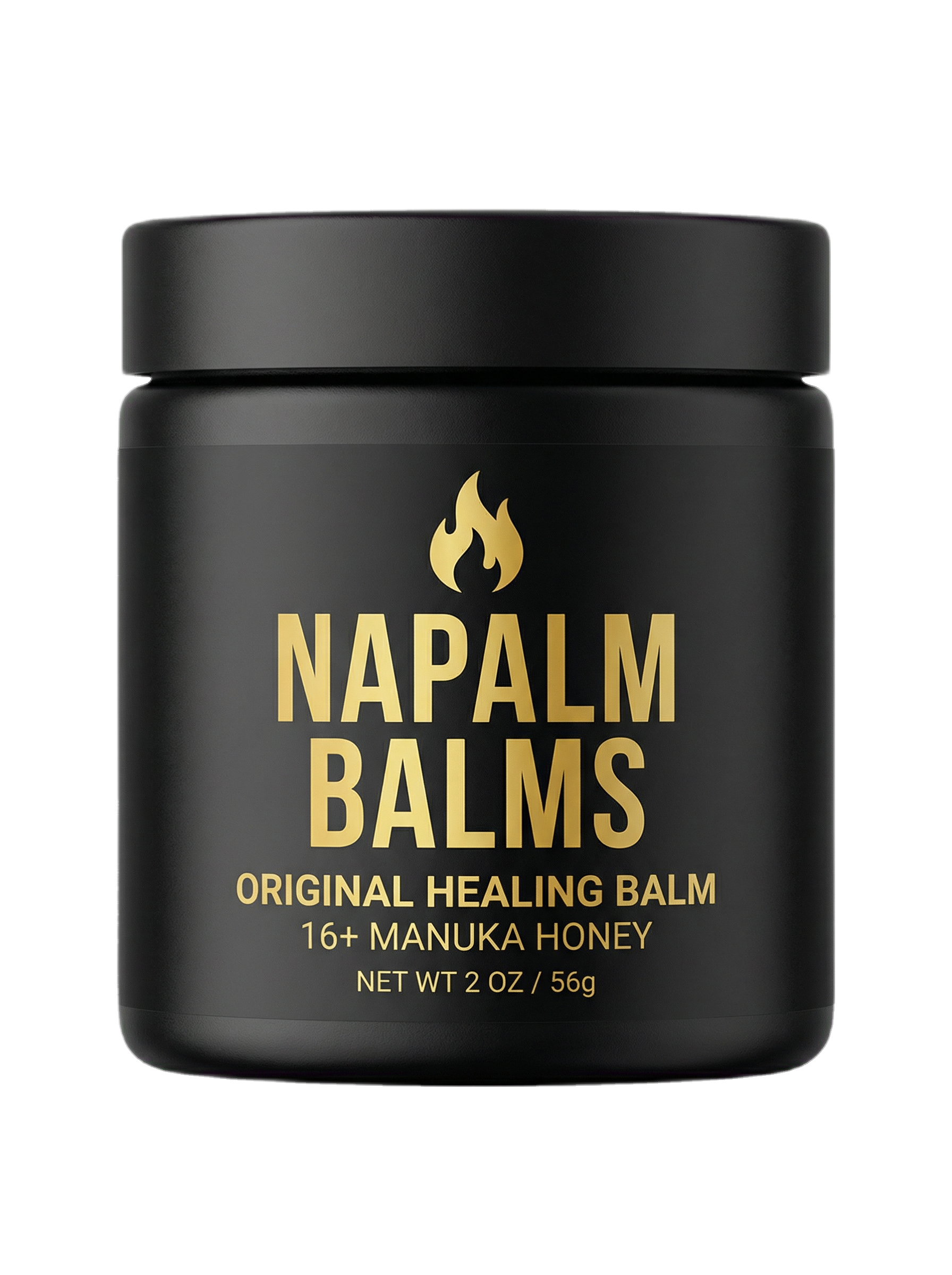
Original Healing Balm
The 16+ UMF Manuka Honey formula. Antibacterial, anti-inflammatory, and deeply moisturizing. The only aftercare you need for the first two weeks.
Shop Now
Week 3+ · Color Protection
Vivid Color Lock
A lighter daily formula designed for healed tattoos. Maintains skin elasticity, provides antioxidant protection, and keeps colors vibrant long-term.
Shop Now
Not Sure Yet · Try First
Free Sample
Try the Original Healing Balm formula before you commit. Same formula as the full-size jar — shipped to your door. Just cover a small shipping fee.
Claim Sample
Your Ink Deserves Better

Heal Right.
Stay Vivid.

Stop putting petroleum on a wound. Start healing the way your skin was designed to.

Shop Now Try Free Sample
Added to Cart
View Cart